Banjo String Instrument Embroidery Review
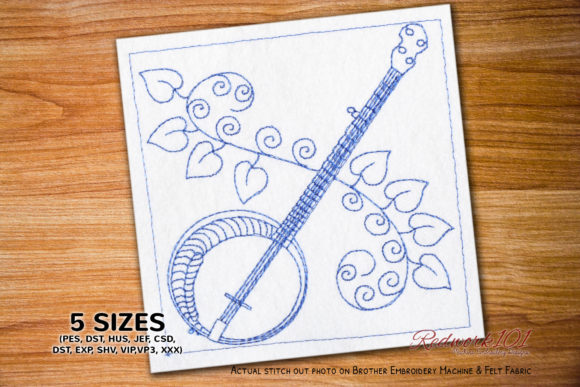
As an embroidery designer who spends weekends setting up booths at local craft fairs and handmade markets, I have learned one hard truth: first impressions are everything. Customers walk past dozens of tables in seconds. They glance at a display, maybe pick up a tote bag or flip through a stack of tea towels, and decide within moments whether your work feels worth their money. That is why I take every new machine embroidery design seriously before I even load the hoop. Today, I am reviewing a specific digital asset titled "Banjo String Instrument," which features a stylishly decorated banjo with a floral background. This review breaks down how this embroidery file performs in the real world of production, photography, and sales.
First Impressions and Visual Appeal
When you look at the preview for the Banjo String Instrument, the immediate feeling is one of rustic elegance mixed with modern charm. The description highlights a "stylishly decorated banjo" set against a "floral background." In my experience, combining musical instruments with botanical elements creates a timeless aesthetic that appeals to a broad demographic. It does not feel overly trendy, which means it will likely remain relevant on your shelves longer than a meme-based design might.
The visual balance here is key. A banjo is a complex shape with many strings and mechanical parts. If rendered poorly, it can look cluttered. However, the inclusion of the floral background suggests a softer, more decorative approach rather than a hyper-realistic technical drawing. This makes it versatile. It feels appropriate for farmhouse decor lovers, bluegrass enthusiasts, and anyone who appreciates vintage-inspired art. For a booth display, this kind of imagery stands out because it tells a story. It isn't just a logo; it is a scene.
Product Suitability and Versatility
The true test of any craft fair product is its adaptability. Can this design work across multiple items without losing its impact? Based on the composition described, the Banjo String Instrument excels as a focal point on several key products.
- Tote Bags: This is perhaps the strongest candidate. A large floral banjo design looks stunning centered on a canvas tote. It acts as wearable art, perfect for the Etsy seller looking to create a signature item. The size of a standard tote allows the floral details to breathe, ensuring customers can appreciate the intricacy from a distance.
- Apron Embroidery: For the home cook who loves music, placing this design on the bib of a denim or linen apron adds a personal touch. It transforms a utilitarian kitchen tool into a gift-worthy item. Just be mindful of the placement; ensure the banjo head aligns nicely with the pocket or neckline.
- Tea Towel Embroidery: Kitchen textiles are high-margin impulse buys. The floral theme pairs naturally with kitchen aesthetics. When hung on a rack at a market, the contrast between the fabric texture and the smooth embroidery threads catches the light, drawing eyes to your table.
- Embroidered Patch: Creating a patch version of this design is a smart move. Patches can be ironed or sewn onto hats, jackets, or backpacks by the end-user. This expands your product line beyond finished goods into accessories that allow customers to customize their own gear.
- Pillow Covers and Small Pouches: For smaller formats, the design needs to be scaled carefully. On a pillow cover, it serves as a statement piece. On a small pouch, it works best if treated as a concentrated motif rather than a full-scene reproduction.
Production Practicality and Technical Considerations
Before committing to batch production, I always evaluate the technical aspects of a digital embroidery file. The Banjo String Instrument presents some specific challenges and opportunities that every maker must consider.
Stitch Density and Detail: Banjos have thin strings and intricate hardware. If the stitch density is too high, the fabric may pucker, especially on lightweight materials like cotton tea towels. Conversely, if the detail is too fine, it may disappear when viewed from three feet away at a busy market. I recommend testing the smallest elements to ensure they hold their shape. The floral background should provide enough contrast to separate the instrument from the backdrop, but check that the thread colors do not blend together too much.
Fabric Texture Compatibility: One common mistake is embroidering on heavily textured fabrics without adjusting the design. The Banjo String Instrument, with its detailed background, requires a relatively smooth surface to render clearly. Heavy waffle-weave towels or nubby linen might obscure the finer floral details. Stick to smoother cottons or blends for the best results, or use a cut-away stabilizer to support the fabric during stitching.
Hoop Size and Spacing: Confirm the recommended hoop size before starting. If the design is large, you may need to rotate the hoop or split the embroidery into two sections, which can leave visible seam lines. Ensure the design fits comfortably within your machine’s capabilities without requiring excessive trimming.
Selling Strategy and Customer Engagement
How does this design help you sell? At a craft fair, your products must communicate value instantly. The Banjo String Instrument works well because it targets specific niches: musicians, folk music fans, and those who love rustic home decor. These are passionate buyers who often buy gifts for others.
Photography and Mockups: Before listing this on Etsy or your online shop, create a printable mockup or photograph real samples. Show the banjo design on a tote bag being carried outdoors, or on an apron in a bright kitchen. Natural light helps highlight the sheen of the threads and the depth of the floral background. Good photography bridges the gap between a digital file and a tangible finished product.
Batch Production Efficiency: Once you have dialed in your settings, this design should run consistently. If you are producing commercial embroidery items, consistency is king. Check that the color palette remains stable across different batches of thread. The optional box stitch mentioned in the description can be used to frame the design on patches or smaller items, adding a polished, professional border that increases perceived value.
Designer’s Checklist for Success
- Test on Scrap Fabric: Never go straight to your final product. Stitch the design on scraps of your actual target fabric to check for puckering or tension issues.
- Review Thread Contrast: Ensure the banjo and floral colors stand out against your chosen fabric. Dark fabrics may require lighter thread for visibility, while light fabrics offer more flexibility.
- Inspect Stitch Density: Look closely at the string areas. Are they too dense? Too sparse? Adjust if necessary to prevent breakage or loss of detail.
- Confirm Commercial Licensing: Always verify that you have the right to sell physical products made from this design assets package. Licensing terms vary widely.
- Create Real Samples: Build at least one complete product, such as a finished tote bag, to see how the design behaves in three dimensions. Curved surfaces like caps can distort circular designs, so plan accordingly.
In conclusion, the Banjo String Instrument is a strong contender for any small shop product lineup. Its blend of musical nostalgia and floral beauty offers wide appeal. By paying attention to fabric choice, stitch quality, and presentation, you can turn this digital file into a standout handmade product that captures attention at your next market booth.